What Bridgerton Doesn't Tell You: Colonialism and South Asian Intergenerational Trauma
Content warning: This post discusses colonialism, economic exploitation, famine, cultural erasure, and historical trauma. Please engage with care and take breaks as needed
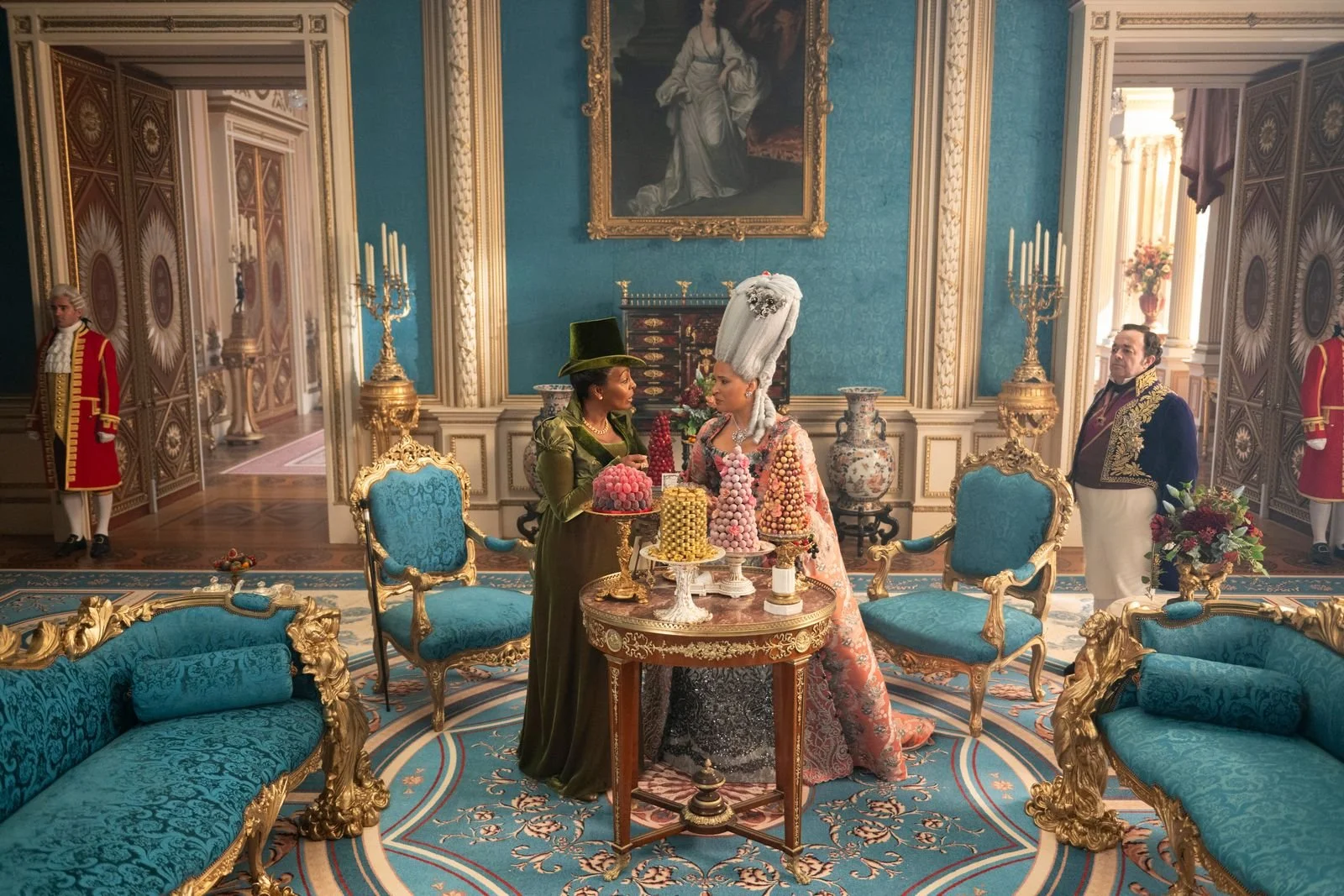
Bridgerton royal palace: queen Charlotte with lady danbury
The wealth Bridgerton celebrates was stolen
Bridgerton is gorgeous. The costumes, the romance, the music, the opulent estates and glittering ballrooms. It's escapist fantasy at its finest.
But here's what the show doesn't tell you: The wealth on display—the Bridgerton estate, the lavish balls, the aristocratic leisure—was built on the systematic exploitation and theft from colonized nations, including India.
As a South Asian psychologist watching Season 2 and now Season 4 with Kate, Edwina, and Sophie Baek (who has East Asian heritage), I see something the show glosses over: the colonial violence that made this world possible.
Britain didn't just "trade" with India. The East India Company, backed by the British Crown, systematically looted an estimated $45 trillion from India between 1765 and 1938. They engineered famines that killed millions. They destroyed India's thriving textile industry to benefit British manufacturers. They extracted resources, labor, and wealth while leaving devastation.
And when British men from the East India Company had children with Indian women—which happened extensively—those mixed-race children (called Anglo-Indians) were often sent to England, forced to shed their Indian identity, and raised to be "properly" British.
This isn't just history. This is intergenerational trauma that shows up in my therapy office every week.

What the East India Company actually did
Before we talk about how this shows up in Bridgerton or in therapy, let's be clear about the historical reality.
Economic extraction and engineered famine
The East India Company wasn't a benign trading entity. It was a corporate colonizer with its own army.
What they did:
Destroyed India's economy: India had 23% of global GDP before British colonization. By the time Britain left in 1947, it was 4%.
Engineered famines: British policies led to multiple famines, including the Bengal Famine of 1943 that killed 3 million people. Food was exported to Britain while Indians starved.
Destroyed industries: India's textile industry was the world's finest. Britain systematically destroyed it, cut off weavers' thumbs, and forced India to buy British-manufactured cloth.
Extracted wealth: $45 trillion stolen over 200 years—wealth that built British estates, funded the Industrial Revolution, and created the aristocracy Bridgerton romanticizes.
This matters clinically because: Economic trauma doesn't end when the extraction stops. Generational poverty, scarcity mindset, and the belief that "we'll never have enough" are trauma responses passed down through families.
Anglo-Indian children: The erasure Bridgerton won't show
Here's where it connects directly to the show.
British men working for the East India Company frequently had relationships with Indian women—some consensual, many coercive or exploitative given the power dynamics.
These relationships produced mixed-race children called Anglo-Indians.
What happened to these children?
If acknowledged by their British fathers:
Sent to England to be raised "properly British"
Forced to erase their Indian identity, language, culture
Taught to view their Indian heritage as inferior, shameful
Expected to assimilate completely into British society
Often faced racism and rejection despite erasure efforts
If not acknowledged:
Abandoned entirely
Left in India with mothers who had no social standing
Faced discrimination in both British and Indian communities
Lived in a liminal space, belonging nowhere
This is forced assimilation as trauma. This is identity erasure as violence.
The theory: Is Lady Mary (Kate and Edwina's mother) Anglo-Indian?
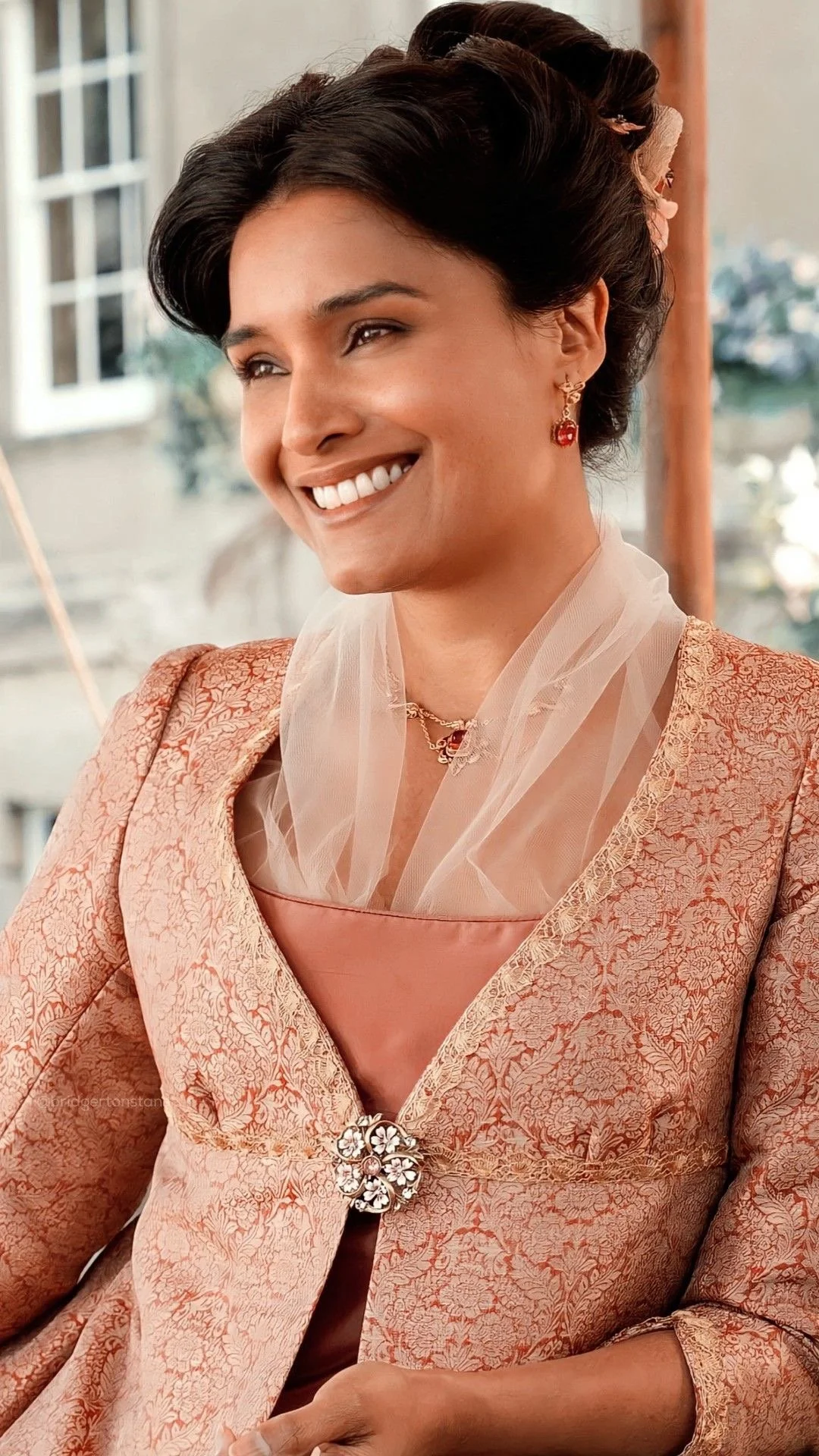
This is speculative, but clinically interesting.
What we know about Lady Mary:
British
Married an Indian man (Earl of Sheffield, Kate and Edwina's father)
This would have been EXTREMELY scandalous in Regency England
She's accepted in British society but her daughters face racism
The show doesn't explain her backstory deeply
The theory: Lady Mary herself could be Anglo-Indian—the daughter of an East India Company officer and an Indian woman, raised in England to be British, forced to erase her Indian heritage.
This would explain:
Why she married an Indian man (reconnecting with erased heritage)
Her complicated relationship with British society (she's in it but not fully of it)
Kate and Edwina's navigation of dual identity
The family's positioning between British and Indian worlds
Whether or not this is canon, it represents a historical reality: Thousands of Anglo-Indian children were erased, assimilated, and forced to bury their Indian identity. And that erasure created identity trauma that passed through generations.
This is speculative, but clinically interesting.
What we know about Lady Mary:
British
Married an Indian man (Earl of Sheffield, Kate and Edwina's father)
This would have been EXTREMELY scandalous in Regency England
She's accepted in British society but her daughters face racism
The show doesn't explain her backstory deeply
The theory: Lady Mary herself could be Anglo-Indian—the daughter of an East India Company officer and an Indian woman, raised in England to be British, forced to erase her Indian heritage.
This would explain:
Why she married an Indian man (reconnecting with erased heritage)
Her complicated relationship with British society (she's in it but not fully of it)
Kate and Edwina's navigation of dual identity
The family's positioning between British and Indian worlds
Whether or not this is canon, it represents a historical reality: Thousands of Anglo-Indian children were erased, assimilated, and forced to bury their Indian identity. And that erasure created identity trauma that passed through generations.
How colonialism shows up as intergenerational trauma
You might be thinking: "This happened 200 years ago. Why does it matter for therapy today?"
Because trauma is inherited.
Not genetically in a deterministic way, but through:
Belief systems passed down: "We're less than Europeans," "Lighter is better," "Hide your culture to succeed"
Survival strategies: Hypervigilance, scarcity mindset, code-switching, assimilation
Unprocessed grief: Loss of language, culture, wealth, land, identity
Systemic inequality: Poverty, lack of generational wealth, ongoing discrimination
This is what clinicians call historical trauma or intergenerational trauma. The original wound happened generations ago, but the impact echoes forward.
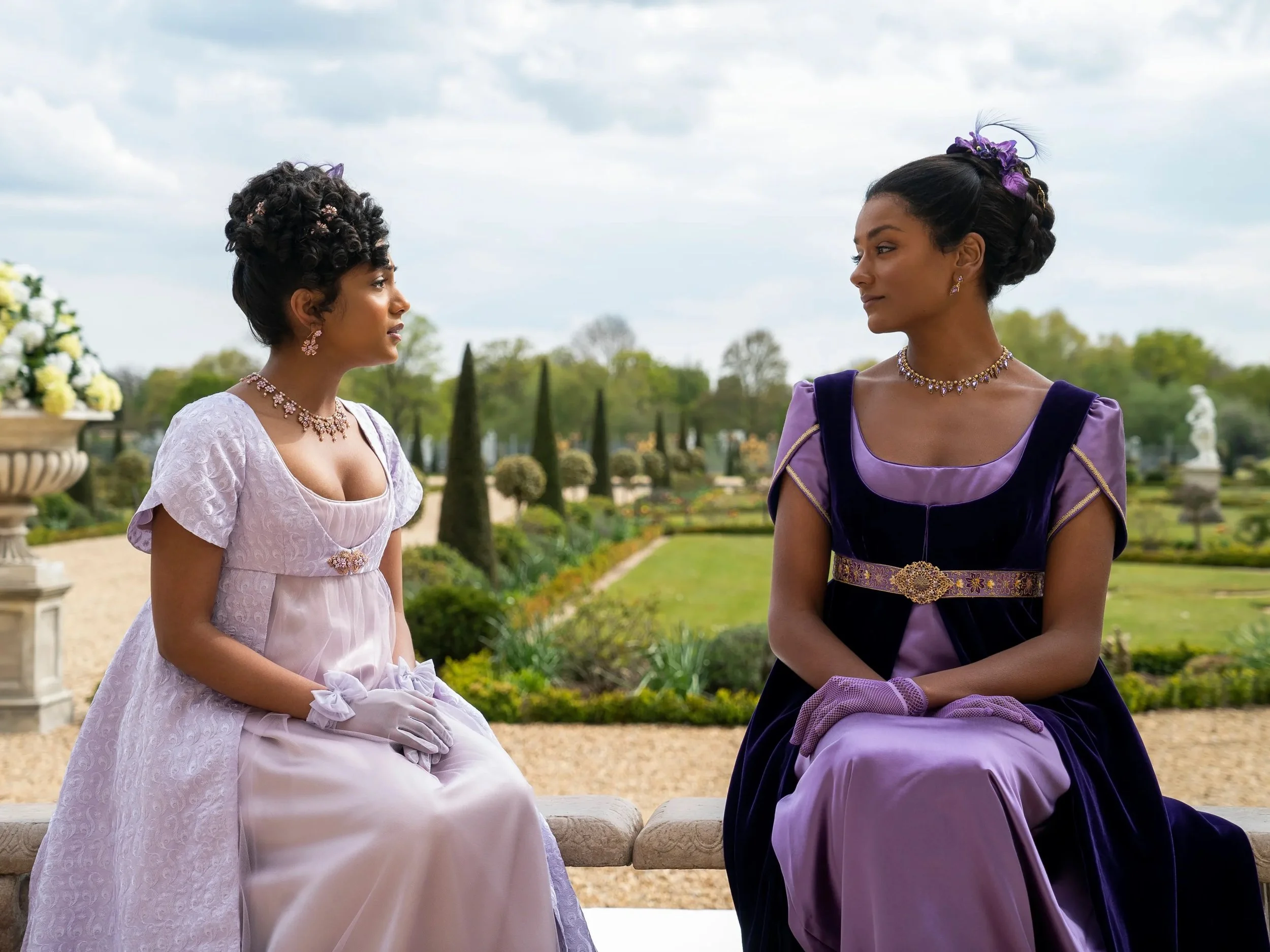
The clinical manifestations I see in South Asian clients
1. Internalized inferiority and worthlessness
Believing you're fundamentally "less than" white/Western people. Constantly proving your worth through achievement. Feeling like you have to work twice as hard to deserve half as much. Imposter syndrome that no amount of success quiets.
Colonial roots: British colonizers explicitly taught that Indians were inferior—less intelligent, less civilized, less worthy. This messaging was systemic: in education, law, media, religion.
My South Asian clients often describe feeling like they're "not enough"—not smart enough, not attractive enough, not successful enough. No matter what they achieve, there's an internal voice saying "you don't really deserve this."
This isn't individual low self-esteem. This is internalized colonialism.
2. Colorism and beauty standards
Belief that lighter skin is more beautiful, more valuable. Shame about dark skin, "ethnic" features, body hair. Skin bleaching, cosmetic procedures to look "less Indian." Preference for light-skinned partners.
Colonial roots: British colonizers explicitly valued lighter skin and European features. They created hierarchies where lighter Indians had more access, more opportunities, more worth.
South Asian families still perpetuate colorism—comments about a baby's skin tone, warnings to stay out of the sun, marriage prospects tied to complexion. This isn't "cultural preference." This is colonial conditioning.
In therapy, we work on recognizing: the beauty standards you're chasing aren't neutral. They're the legacy of people who colonized your ancestors and taught you to hate yourself.
3. Cultural shame and code-switching
Hiding your culture around white people. Shame about accent, food, clothes, religion. Not teaching your children your native language. Anglicizing your name, changing your appearance.
Colonial roots: Anglo-Indian children were forced to erase their Indian identity to survive in British society. Speaking Hindi, wearing Indian clothes, practicing Hinduism/Islam/Sikhism—all marked you as inferior, uncivilized, unworthy.
This is survival code-switching learned from ancestors who were punished for being visibly Indian.
In therapy, we explore: What would it feel like to reclaim the parts of your culture you were taught to hide? What would pride look like instead of shame?
4. Economic trauma and scarcity mindset
Chronic fear there will never be enough money. Hoarding, inability to spend even when financially secure. Hypervigilance about financial security. Generational poverty despite working multiple jobs.
Colonial roots: Britain systematically extracted wealth from India for 200 years. Families that were prosperous became impoverished. Land was stolen. Industries destroyed. Famines engineered.
South Asian families often have intense anxiety about money—even when objectively secure. There's a deep belief: "It could all disappear overnight."
This isn't irrational anxiety. This is ancestral memory of having everything stolen.
In therapy, we acknowledge: Your scarcity mindset protected your family when resources actually were scarce. Now we work on recognizing when you're safe and building trust in present stability.
5. Perfectionism and hyperachievement
Driven to achieve in Western systems. Belief that success will finally make you "worthy." Can't rest, can't be satisfied, can't be "good enough." Burnout from constant striving.
Colonial roots: Under colonial rule, Indians had to be exceptional to access basic opportunities. You had to be "twice as good" just to be seen as equal.
South Asian families push children toward medicine, engineering, law—prestigious Western professions that "prove" worth. But no achievement quiets the internal pressure.
This is trying to earn worthiness that colonialism taught you to question.
In therapy, we explore: What would it mean to be ordinary and still deserving of love, rest, peace?

Why Kate Sharma's self-sacrifice isn't just "family dynamics"
Let's return to Kate.
Yes, Kate is the eldest daughter in a family system that parentified her. Yes, cultural expectations of duty (farz) shaped her.
But there's another layer: colonial conditioning.
Kate has internalized the message that South Asian women must be twice as accommodating, twice as selfless, twice as perfect to be worthy of love and security in a British world.
Watch how Kate operates:
Hypervigilant about social standing (one misstep could ruin them)
Sacrifices her own desires entirely (she doesn't deserve to want)
Works harder than anyone to secure Edwina's future (South Asians must earn their place)
Cannot imagine a British aristocrat genuinely loving her (she's inferior)
This isn't just eldest daughter syndrome. This is surviving in a world where your colonized identity makes you vulnerable.
When Anthony pursues Kate, her first instinct is: "This can't be real. I'm not worthy of this." That's not low self-esteem. That's internalized colonialism telling her she's fundamentally less than.
What Bridgerton chooses not to show
I love Bridgerton for its representation. Seeing South Asian and East Asian characters as leads is meaningful.
But the show makes a deliberate choice: to erase the colonial violence that made this world possible.
What they don't show:
Where the Bridgerton wealth came from (colonial extraction)
What was happening in India while aristocrats danced (famine, exploitation)
The East India Company's role in creating this economy
What happened to Anglo-Indian children (forced assimilation, identity erasure)
The racism Kate, Edwina, and Sophie would have actually faced (it's sanitized)
Why this matters: When we romanticize the Regency era without acknowledging its violence, we participate in erasing colonial trauma.
When we watch beautiful love stories set in estates built on stolen wealth, we're invited to forget where that wealth came from.
I'm not saying don't enjoy the show. I love watching this series myself which is why I chose to deep dive into this to begin with! I'm saying: engage with awareness.
Healing from colonial trauma in therapy
If you're a South Asian person who experiences:
Internalized inferiority ("I'm not good enough")
Colorism and shame about your appearance
Cultural shame and code-switching
Economic anxiety despite financial security
Perfectionism and hyperachievement
Feeling like you have to constantly prove your worth
This isn't personal failure. This is colonial trauma.
How therapy helps:
1. Naming the source Understanding that your "not enoughness" didn't originate with you. It was taught—by colonizers, by systems, by generational transmission. This isn't your fault.
2. Challenging internalized beliefs Examining: Which beliefs are truly yours? Which were imposed by colonial conditioning? What would you believe about yourself if colonialism hadn't taught you to hate your identity?
3. Reclaiming culture without shame Exploring what it would feel like to speak your language, eat your food, wear your clothes, practice your religion without apology. Building pride where there was shame.
4. Processing grief There's profound grief in recognizing what colonialism stole—language, land, wealth, culture, dignity, identity. We create space for that grief without rushing to "fix" it.
5. Building decolonized self-worth Your worth isn't contingent on: achievement, assimilation, being "less visibly Indian," proximity to whiteness. You're worthy because you exist. Full stop.
6. Connecting with community You're not alone in this. Connecting with other South Asians processing colonial trauma, reclaiming culture, and healing together.
A note on complexity
I want to be careful here.
Not every struggle South Asian people face is caused by colonialism. Families can be dysfunctional for many reasons. Mental health conditions have biological components. Individuals make choices independent of historical context.
And: We can acknowledge that colonialism created specific, measurable, ongoing harm that shows up in predictable patterns.
Both are true.
Therapy helps us hold complexity: honoring individual experience while recognizing systemic and historical forces that shaped it.
You deserved better than what colonialism taught you
If you internalized the message that you're inferior, that your culture is shameful, that you must constantly prove your worth, that lighter is better, that Western is superior—
You didn't choose those beliefs. They were forced on your ancestors and transmitted to you.
You deserved to grow up knowing:
Your skin color is beautiful exactly as it is
Your culture, language, food, traditions are valuable
Your worth isn't contingent on achievement or assimilation
You belong, exactly as you are
You still deserve all of this.
Healing from colonial trauma doesn't mean rejecting the West or idealizing pre-colonial India. It means:
Understanding where harmful beliefs came from
Choosing which beliefs to keep and which to release
Building an identity that honors your full self
Reclaiming pride in the heritage colonizers tried to erase

Ready to work with someone who understands colonial trauma?
I'm Dr. Darshana Lele, a South Asian clinical psychologist with 26 years of experience. I specialize in:
Intergenerational and historical trauma
Decolonizing self-worth and identity
Navigating dual cultural identities
Healing internalized colonialism (colorism, cultural shame, inferiority beliefs)
Supporting first-generation and second-generation South Asians
I offer therapy in English and Hindi, in-person in Pasadena and virtually throughout California.
Book a free 20-minute consultation: (626) 214-5366 or click this link
The harm colonialism caused was real. The trauma it created is valid. And healing is possible.
Let's talk about reclaiming the parts of yourself you were taught to hide