You're Not Lazy. You're a High-Achieving South Asian Woman With Undiagnosed ADHD

The achievement doesn't rule out ADHD. It can be evidence of it.
One of the most persistent myths about ADHD is that high achievement and ADHD are mutually exclusive.
They're not.
For many South Asian women, high achievement is the direct result of an undiagnosed nervous system working overtime to compensate. The extraordinary effort that looks like natural ability from the outside. The elaborate systems that look like organization but are actually survival infrastructure. The perfectionism that looks like conscientiousness but is actually anxiety about what happens if you slip.
The straight As weren't evidence you didn't have ADHD. They were evidence of how hard you worked to manage it — without knowing that's what you were managing.
What ADHD actually looks like in high-achieving South Asian women
Not hyperactivity. Not the disruptive classroom behavior. Not the stereotypes.
It looks like:
A mind that runs constantly — even when you're trying to rest. Difficulty beginning tasks you genuinely want to do, not because you're afraid to fail, but because starting requires a neurological ignition that doesn't always fire on command. Time blindness — an hour disappears and you genuinely cannot account for it. Emotional responses that spike quickly and feel disproportionate, then pass just as fast. Forgetting things that matter to you despite trying.
It looks like:
Being told — by family, by teachers, by yourself — that you're not living up to your potential. That you're smart enough to do better. That you just need to focus, to try harder, to want it more.
It looks like:
Building increasingly elaborate compensatory systems. Lists. Reminders. Routines. Backup systems for the backup systems. Not because you're organized — but because without them, things fall apart in ways you can't explain.
The model minority mask is the most effective ADHD mask there is
For South Asian women specifically, the model minority narrative creates a particular kind of blindness.
You're too smart to have ADHD.
This sentence has delayed diagnoses by years, sometimes decades. It is said with good intentions — usually by people who genuinely believe it. And it is categorically wrong.
Intelligence has no bearing on ADHD. Achievement has no bearing on ADHD. Being capable and organized and high-functioning does not rule out a dysregulated nervous system underneath.
What the model minority narrative does is add a layer of cultural expectation on top of an already invisible condition. You aren't just expected to succeed. You're expected to succeed effortlessly. To be naturally gifted. To not need accommodations or support because that would complicate the story.
The mask hides the effort. And the effort hides the ADHD.
The eldest daughter/only daugher layer
In our culture daughters with no siblings often exhibit similar traits to those of eldest daughters. For South Asian women, there's a second mask beneath the model minority one: the eldest or only daughter.
The role that taught you to anticipate everyone else's needs before your own. The training in hypervigilance — reading the room, managing the atmosphere, making sure everyone is okay — that is, coincidentally, exactly the kind of executive function demanding that exhausts a dysregulated nervous system fastest.
Eldest or only daughters with ADHD often function the longest before anyone notices. Because their role trained them to function at a cost to themselves that they learned, very young, not to disclose or show what they really think and feel. Instead focusing on performing.
Along with that, often not discussed in our communities, is how many South Asian women start managing their relationship with food. Because cultural fat phobia is often cloaked as being health conscious, girls learn that controlling their food intake is the one area they actually get to have any decision making power.
A common phrase heard in our culture is “There are kids starving in India!” as girls are taught at a young age to not ‘waste’ any food. On the surface this can look like a good parenting strategy for teaching kids about not wasting food instead they learn how to police their food intake. It’s not surprising then that many high-achieving South Asian women later end up with control issues around food.
When everything else is managed by family expectation, cultural pressure, and a nervous system running on overdrive, what goes into your body can feel like the last thing you actually choose. This isn't something that gets talked about in most ADHD conversations. But for South Asian women navigating both an undiagnosed nervous system and a lifetime of external control, it shows up more than you'd think.
What late diagnosis actually offers
For most South Asian women, an adult ADHD diagnosis isn't a crisis. It's a reframe.
It reframes the "laziness" as impaired executive function. The "sensitivity" as emotional dysregulation. The "not living up to potential" as a nervous system that was working against itself — without the right support.
Late diagnosis doesn't undo the years of self-criticism. But it changes the story. You weren't failing. You were running a different operating system without a manual. And now you have one.The eldest daughter/only daugher layer
In our culture daughters with no siblings often exhibit similar traits to those of eldest daughters. For South Asian women, there's a second mask beneath the model minority one: the eldest or only daughter.
The role that taught you to anticipate everyone else's needs before your own. The training in hypervigilance — reading the room, managing the atmosphere, making sure everyone is okay — that is, coincidentally, exactly the kind of executive function demanding that exhausts a dysregulated nervous system fastest.
Eldest or only daughters with ADHD often function the longest before anyone notices. Because their role trained them to function at a cost to themselves that they learned, very young, not to disclose or show what they really think and feel. Instead focusing on performing.
Along with that, often not discussed in our communities, is how many South Asian women start managing their relationship with food. Because cultural fat phobia is often cloaked as being health conscious, girls learn that controlling their food intake is the one area they actually get to have any decision making power.
A common phrase heard in our culture is “There are kids starving in India!” as girls are taught at a young age to not ‘waste’ any food. On the surface this can look like a good parenting strategy for teaching kids about not wasting food instead they learn how to police their food intake. It’s not surprising then that many high-achieving South Asian women later end up with control issues around food.
When everything else is managed by family expectation, cultural pressure, and a nervous system running on overdrive, what goes into your body can feel like the last thing you actually choose. This isn't something that gets talked about in most ADHD conversations. But for South Asian women navigating both an undiagnosed nervous system and a lifetime of external control, it shows up more than you'd think.The grief is also real — for the years spent fighting yourself, for the support that came too late. That grief deserves space too.
What therapy looks like
ADHD-informed therapy for South Asian women isn't productivity coaching. It's the deeper work of:
Understanding how your nervous system actually works — and what it needs
Separating your authentic self from the compensatory systems you built to survive
Processing the grief of late diagnosis — the years of unnecessary self-criticism
Untangling ADHD from the cultural messages layered on top — the laziness, the not trying hard enough
Rebuilding your relationship with your own capability — accurately, without shame
If you are tired of just surviving, constantly performing and feeling burnt out then schedule your complimentary consult today to see exactly how I can help you with your unique needs. You've been working harder than almost anyone around you deserve support that actually fits how your mind works.
Free 20-minute consultation: (626) 214-5366 or email drlele@mentalwealthinc.com
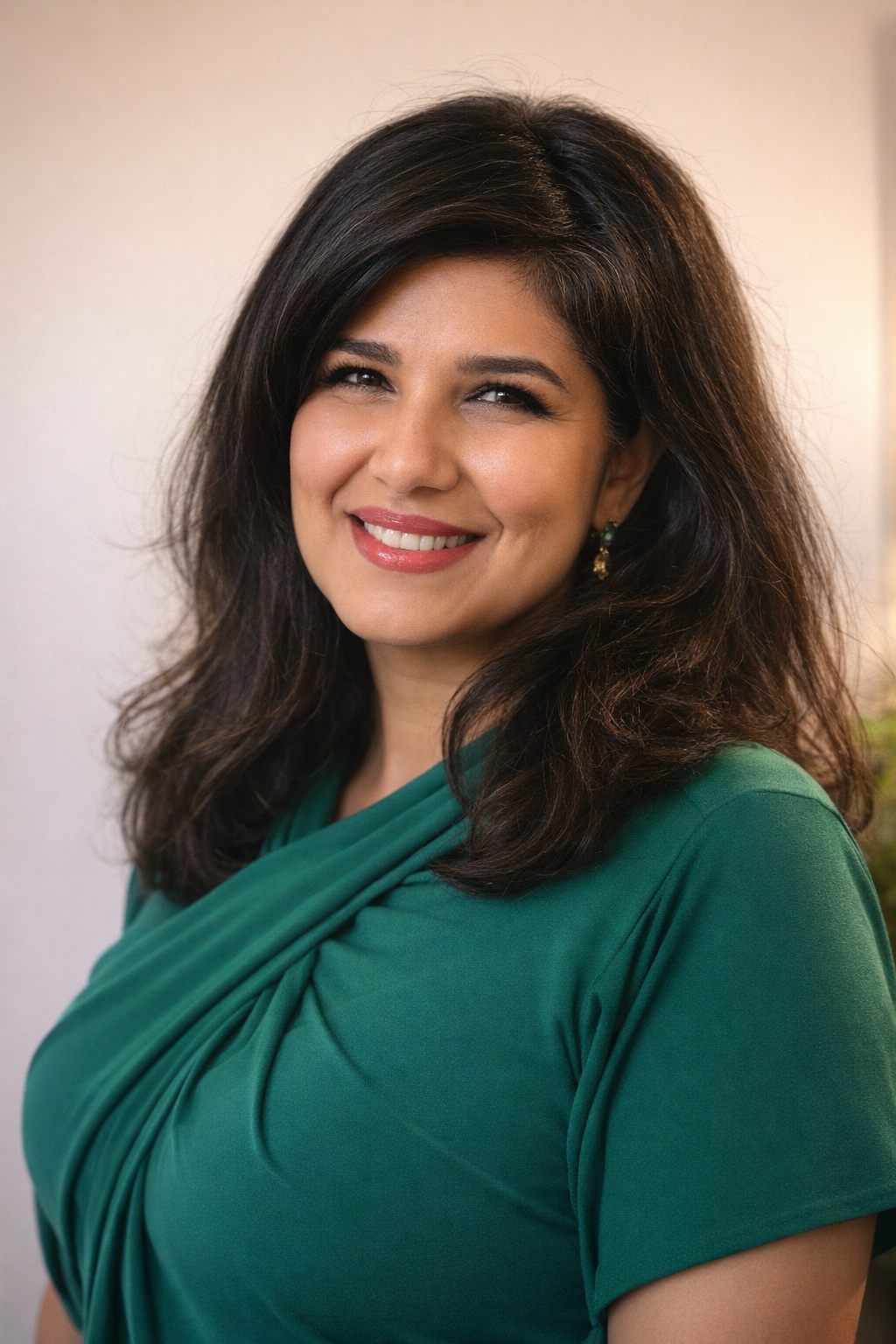
Dr. Darshana Lele, Ph.D., CA Psychologist #24852
Dr. Darshana Lele is a South Asian, Hindi-speaking clinical psychologist with 26 years of experience helping individuals and couples heal from trauma, anxiety, relationship challenges, and cultural pressures. As an LGBTQ+ affirmative, sex-positive trauma therapist, she helps clients understand how past relationships shape present patterns so they can build more authentic, connected, and fulfilling lives.
Learn more about her work with South Asian clients, LGBTQ+ clients, and couples therapy, or visit her About page.