Why South Asian parents struggle to say “I love you”

Did your parents ever say "I love you"?
For many South Asian adults, the answer is no.
Not because their parents didn't love them. But because love—in many South Asian families—was never expressed that way.
Love looked like:
A plate of food appearing without being asked
Being pushed relentlessly toward academic success
Sacrificing everything so you could have opportunities they never had
Never missing a single school event, even after a 12-hour work day
But "I love you"? Three words that can feel impossibly foreign in a language—and a culture—where emotions are kept private, strength means silence, and vulnerability is weakness.
If you grew up in a South Asian family and never heard "I love you," this post is for you.
Why South Asian parents don't say it
This isn't about bad parenting. It's about culture, history, and what got passed down.
1. Collectivism over individualism
Western cultures emphasize individual emotional expression. "Tell people how you feel." "Use your words." "Validate your children's emotions."
South Asian culture is fundamentally collectivist. The family unit matters more than individual emotional needs. Love is demonstrated through sacrifice, duty, and provision—not through verbal affirmation.
Your parents showed love by working three jobs. By cooking elaborate meals. By prioritizing your education above everything else. By worrying about you constantly—even if they never said why.
That was love. It just didn't look like what Western culture taught you to expect.
2. Emotional expression was never modeled
Your parents learned from their parents. And their parents learned from theirs.
In many South Asian families across generations, emotional expression was simply not the norm. Stoicism was strength. Emotional restraint was dignity. Crying, sharing feelings, saying "I love you"—these were considered excessive, even embarrassing.
Your parents couldn't give you what they never received.
This doesn't make it okay that you grew up without verbal affirmation. But it does provide context: they were parenting from what they knew.
3. Intergenerational and colonial trauma
Generations of South Asians survived colonization, partition, famine, economic hardship, and displacement. When survival is the primary goal, emotional expression becomes a luxury.
Emotions were suppressed—not because they didn't exist, but because expressing them felt dangerous. In colonial and post-colonial contexts, emotional vulnerability could be exploited. Stoicism was armor.
That armor got passed down. Your grandparents gave it to your parents. Your parents gave it to you—often without realizing it.
4. Love was conditional on achievement
Many South Asian parents expressed love through pride in accomplishment. Your good grades earned warmth. Your failures earned silence or criticism.
This wasn't cruelty—it was their love language: "I want the best for you, and pushing you hard is how I show it."
But for children, conditional warmth teaches a devastating lesson: I am loved when I succeed. I am not loved when I fail.
This becomes the blueprint for adult relationships, self-worth, and the constant need to achieve.
5. Immigration and survival mode
For immigrant South Asian parents, the cognitive and emotional load of surviving in a new country was immense. Language barriers. Cultural navigation. Financial precarity. Discrimination.
When you're in survival mode, emotional attunement to your children becomes harder. Not because you don't care—but because you're depleted.
Your parents may have been physically present but emotionally unavailable—not from lack of love, but from the weight of everything they were carrying.

How this shows up in your adult life
Growing up without verbal affirmation, emotional validation, or explicit love expression creates patterns that follow you into adulthood.
You struggle to feel "enough"
When love was tied to achievement, you learned: my worth = my performance. No matter how much you accomplish, something always feels lacking. The goalposts keep moving. There's always more to do, more to prove.
This is perfectionism rooted in childhood emotional needs going unmet.
You find it hard to receive love
When someone loves you freely—without conditions, without you having to earn it—it feels suspicious. Uncomfortable. Like it can't be real.
You push love away, test it, or minimize it. Because the love you grew up with always came with conditions, unconditional love feels foreign and untrustworthy.
You struggle to express love yourself
You love deeply. But saying it out loud—"I love you," "I'm proud of you," "I miss you"—feels impossibly vulnerable. You show love through actions: doing things for people, being reliable, showing up.
Sound familiar? You inherited your parents' love language.
You carry grief you can't name
There's a profound sadness in realizing your childhood emotional needs weren't met. Not because your parents didn't love you—but because they didn't know how to show it in ways you could receive.
This grief is real. It deserves space.
Your relationships repeat the pattern
You choose partners who are emotionally unavailable. Or you become the one who overfunctions emotionally—giving endlessly while your own needs go unmet.
You recreate what you know, even when it hurts you.
The complexity: holding both realities
Here's what makes this so hard: your parents loved you AND failed to meet your emotional needs.
Both are true.
You can honor the sacrifices they made AND grieve what you didn't receive.
You can understand why they couldn't express love AND feel the impact of growing up without it.
You can love your parents AND acknowledge how their emotional unavailability shaped you.
This isn't about blame. It's about understanding—so you can break the cycle.
What healing looks like
Grieving what you didn't receive
Many South Asian adults in therapy have never allowed themselves to grieve this. "My parents sacrificed so much—how can I complain?"
But grief isn't ingratitude. Your childhood emotional needs were real. They mattered. The little version of you who wanted to hear "I love you" and didn't—that child deserved it.
We create space for that grief without rushing to "it's fine" or "they did their best."
Separating your worth from achievement
In therapy, we work on untangling your identity from your accomplishments. Who are you when you're not achieving? What makes you worthy of love on an ordinary Tuesday when you haven't accomplished anything?
This is deep work. And it changes everything.
Learning new love languages
You can learn to receive love in new ways. To tolerate being loved without earning it. To say "I love you" when you mean it, even if it feels uncomfortable.
You can build relationships—romantic, platonic, familial—that operate differently from the one you grew up in.
Understanding without excusing
Understanding why your parents were emotionally unavailable doesn't mean excusing the impact. Therapy helps you hold both: compassion for your parents' limitations AND accountability for healing yourself.
Breaking the cycle with your own children
Many of my clients are terrified of repeating their parents' patterns. Therapy helps you parent consciously—expressing love verbally, validating emotions, and building the emotional vocabulary your parents never had.
You can be the parent who says "I love you" and means it.
A note on talking to your parents about this
Some clients want to have this conversation with their parents. Others don't—and that's valid.
If you do:
Approach with curiosity, not accusation
"I've been thinking about how we show love in our family"
Don't expect an apology—you may not get one
Your healing isn't contingent on their acknowledgment
If you don't want to have this conversation:
You can heal without their participation
Your relationship with your own emotional expression can change regardless of theirs
The love was always there
Your parents loved you. In the way they knew how.
But love that can't be expressed in ways you can receive leaves a wound—regardless of intent.
You deserved to hear "I love you." You deserved warmth that didn't depend on your grades. You deserved emotional presence alongside material provision.
And you still deserve all of this—from yourself, from your relationships, from the life you're building.
Therapy is a place to receive what you missed. To be seen, validated, and cared for in the ways your younger self needed.

Ready to heal beyond what you were given?
I'm Dr. Darshana Lele, a South Asian clinical psychologist with 26 years of experience. I specialize in:
Intergenerational trauma and family dynamics
Healing from emotional unavailability
Building self-worth beyond achievement
South Asian cultural identity and family patterns
I offer therapy in English and Hindi, in-person in Pasadena and virtually throughout California.
Free 20-minute consultation: call/text (626) 214-5366, click Book Consult or go to mentalwealthinc.com/contact
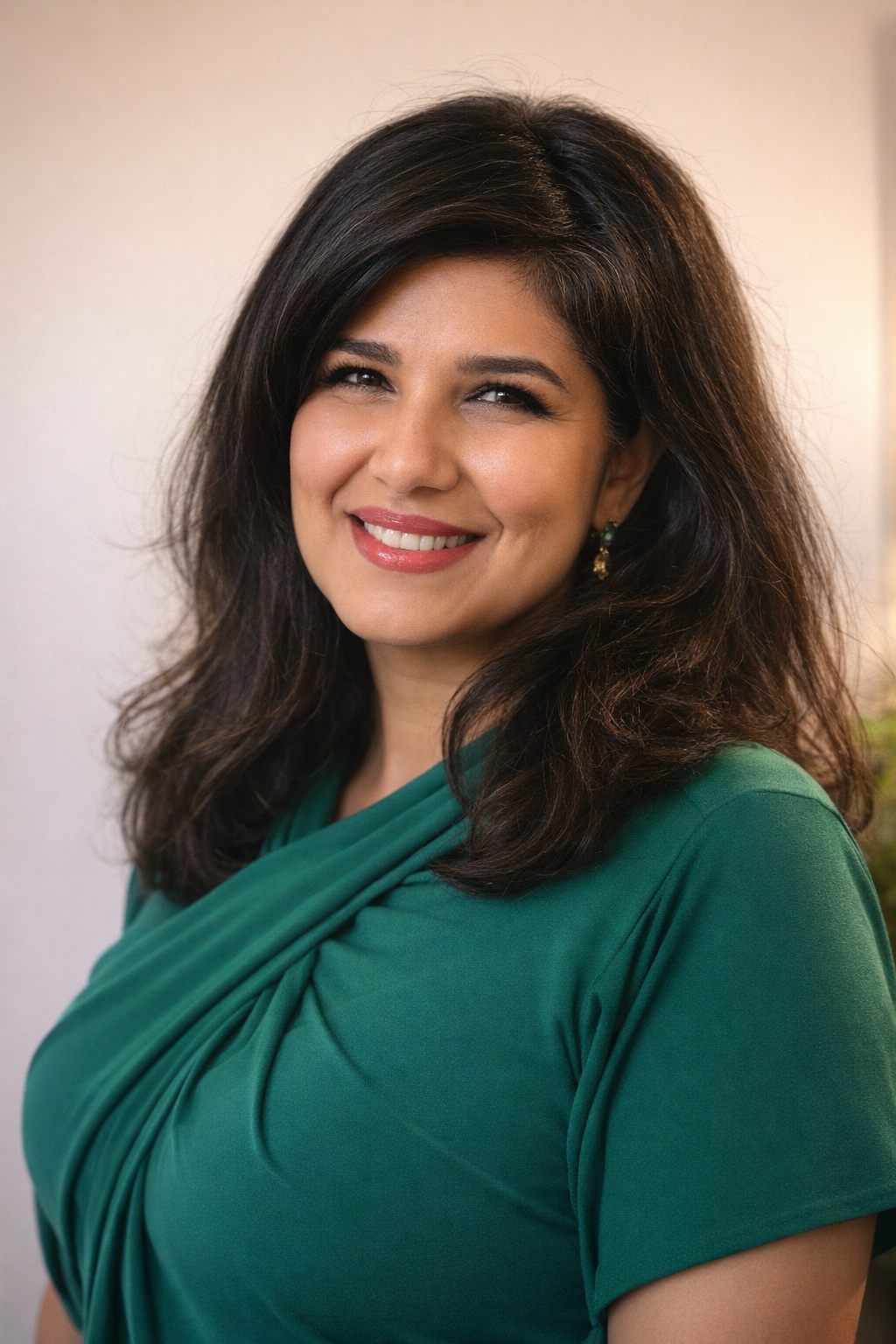
Dr. Darshana Lele, Ph.D., CA Psychologist #24852
Dr. Darshana Lele is a South Asian, Hindi-speaking clinical psychologist with 26 years of experience helping individuals and couples heal from trauma, anxiety, relationship challenges, and cultural pressures. As an LGBTQ+ affirmative, sex-positive trauma therapist, she helps clients understand how past relationships shape present patterns so they can build more authentic, connected, and fulfilling lives.
Learn more about her work with South Asian clients, LGBTQ+ clients, and couples therapy, or visit her About page.