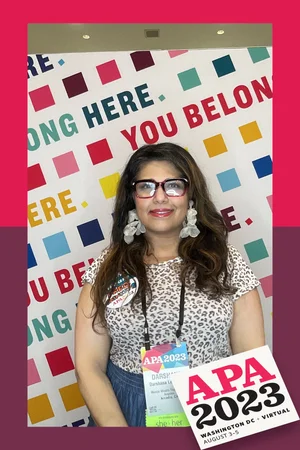
Coming Out When Your Family Doesn't Have the Words: LGBTQ+ South Asians and the Cost of Authenticity

This post discusses coming out, family rejection, cultural shame, and LGBTQ+ identity. Please engage with care.
Benedict Bridgerton came out to Sophie. It was beautiful. And it was nothing like real life.
In Bridgerton Season 4, Benedict's coming out is handled with grace. Sophie, the love of his life, accepts him. The conversation is slightly difficult but ultimately having nothing to do with his sexual partners/orientation. He gets to be fully himself.
For LGBTQ+ South Asian adults watching that scene, the reaction is often complicated.
Because for us, coming out rarely looks like that.
Coming out in a South Asian family means navigating:
A culture where LGBTQ+ identities are often still considered shameful, sinful, or simply impossible
Parents whose love feels conditional on you being who they expected
The threat of losing family, community, marriage prospects, and cultural belonging—all at once
The weight of being "the one who broke the family"
This is what I see in my therapy office. And this is what Pride Month is really about—not just celebration, but survival.
The specific burden of being LGBTQ+ and South Asian
Being LGBTQ+ is hard. Being South Asian is its own complexity. Being both creates a unique intersection of pressures that most mental health resources don't address.
You belong nowhere fully
In LGBTQ+ spaces, you may face racism or feel culturally invisible. Your experiences—arranged marriage pressure, family honor, the specific shame of South Asian culture—aren't always understood or centered.
In South Asian spaces, you hide your queerness to survive. You code-switch constantly. You become expert at performing the version of yourself your community can accept.
You're never fully home anywhere. This is double minority stress—and it has real mental health consequences.
For many LGBTQ+ South Asian adults, this double burden compounds an already complex birth order wound. If you've spent your life as the hyperresponsible eldest daughter or the people-pleasing youngest child—add queerness to that equation and the weight becomes almost impossible. I explore how birth order creates specific patterns in South Asian families in depth here: [Birth Order Therapy for South Asian Families →]
Your family's love comes with conditions you didn't choose
For many South Asian families, the response to coming out isn't immediate acceptance. It's:
Silence
"This is a phase"
"You've been influenced by Western culture"
"Don't tell anyone—this will destroy our family's reputation"
"We didn't sacrifice everything for this"
Or complete rejection
None of these responses mean your family doesn't love you. But they mean their love has conditions you can't meet by being yourself.
This is one of the most painful experiences a person can have.
The coming out calculation is different for South Asians
For white LGBTQ+ adults, coming out often means risking family acceptance. For South Asian LGBTQ+ adults, the stakes can include:
Being cut off financially (especially if still dependent)
Being forced into an arranged marriage with the opposite sex
Being sent "back home" or to conversion therapy
Losing your entire community—family friends, religious community, cultural connections
Losing your cultural identity itself
The calculation isn't just "will my parents accept me?" It's "will I lose everything?"
This mirrors what I explored in Sophie Baek's story from Bridgerton Season 4—how economic dependence and power imbalances make "choice" almost impossible. When your survival depends on others' approval, authenticity becomes a luxury. Read more: [When Romance Meets Power: What Sophie Baek's Story Teaches About Consent →]
Internalized homophobia and transphobia in South Asian context
Many LGBTQ+ South Asians grew up hearing that homosexuality was a Western invention, a mental illness, a sin, a disgrace. These messages were delivered not by strangers but by beloved family members, trusted religious leaders, community elders.
When the people who love you most tell you that who you are is shameful, you internalize that message.
In therapy, I see South Asian LGBTQ+ adults who genuinely believe:
"I am broken"
"I deserve to be alone"
"My desires are wrong"
"I'm destroying my family by existing"
"It would be easier if I just performed the expected life"
This isn't low self-esteem. This is the result of years of targeted messaging from people who love you, in a culture that hasn't created language for who you are.
This internalized shame has roots deeper than family—it's connected to colonial conditioning that taught South Asians to view anything "different" as shameful, Western, or inferior. I explored how British colonialism shaped South Asian identity and self-worth in an earlier post: [What Bridgerton Erases: Colonial Trauma and South Asian Intergenerational Wounds →]
Coming out is not a single moment
Western culture frames coming out as an event. A conversation. Before and after.
For South Asian LGBTQ+ adults, it's a lifelong process—often without resolution.
You come out to yourself first. Often alone, often in secret, often with profound shame.
You come out selectively to trusted friends before anyone in your family. You build a chosen family while maintaining the performance with your family of origin.
You delay coming out to family for years—sometimes decades—while you build financial independence, emotional support systems, and safety.
You may never fully come out to traditional family members. Not from cowardice, but from a calculated assessment of what you can survive.
And throughout this process, you carry the weight of a double life. The exhaustion of constant performance. The grief of loving people who might reject you if they truly knew you.
What about parents who try?
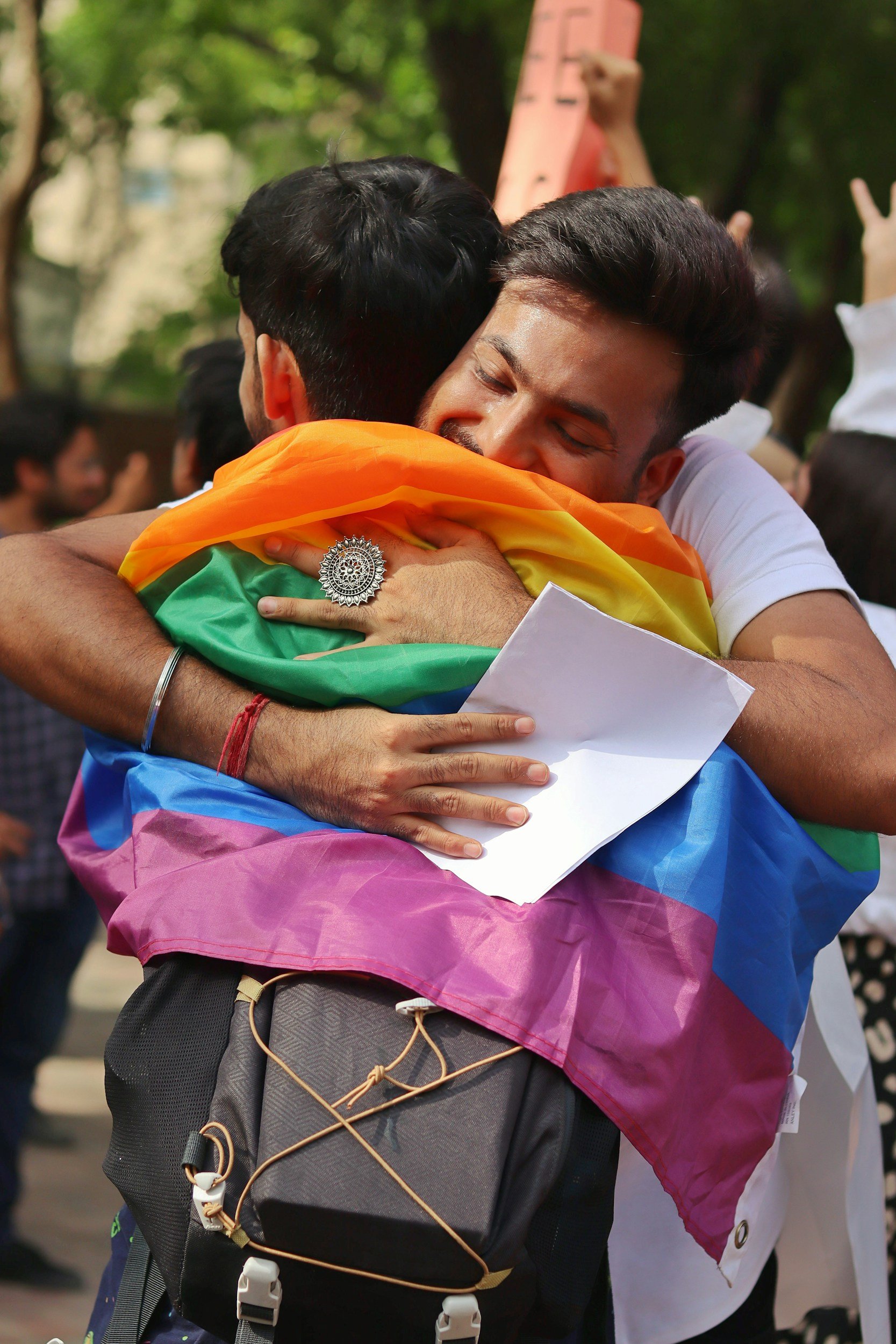
Some South Asian parents, when their child comes out, want to accept them. They love their child. But they don't have the cultural framework, the language, or the community support to process it.
They may say the right things while privately struggling. They may accept in private but ask for silence in public. They may need years to process what their child told them in a single conversation.
This is its own complexity—watching a parent try to love you across a gap they don't know how to cross.
In therapy, we work on: how do you hold space for a parent's process while protecting your own mental health? How do you stay in relationship with someone who is trying—even imperfectly?
The mental health impact
Research consistently shows that LGBTQ+ South Asians experience significantly higher rates of:
Depression and anxiety
Suicidal ideation
Substance use
Social isolation
Identity fragmentation
These aren't consequences of being LGBTQ+.They're consequences of navigating a world that hasn't made space for you.
The double minority stress—racism in LGBTQ+ spaces, homophobia in South Asian spaces—compounds every challenge.
What therapy offers
Safety to exist fully
For many LGBTQ+ South Asian clients, therapy is the first place they've ever been able to be completely themselves. No performance. No code-switching. No hiding.
That experience—of being fully seen and accepted—is itself healing.
Processing internalized shame
We work on untangling the messages you received from the people who love you from the truth of who you are. This takes time. And it's profound work.
Safety planning for coming out
If you're considering coming out, therapy helps you think through:
Who is safe to tell first?
What financial independence do you need?
What support systems do you have?
What are realistic expectations for different family members' responses?
How do you protect yourself if responses are harmful?
Grieving the family you deserved
Whether your family accepts you or not, there's grief in recognizing that the family you needed—one that would love you unconditionally—may not have been what you got.
We create space for that grief.
Building chosen family
For LGBTQ+ South Asians who have been rejected or semi-rejected by family, therapy helps you intentionally build chosen family—people who love you fully, without conditions, without performance.
Holding cultural identity alongside queer identity
You don't have to choose between being South Asian and being LGBTQ+. Therapy helps you integrate both—to find what your culture means to you, what you want to claim, what you want to release, and how to build an identity that holds all of who you are.
To the LGBTQ+ South Asian adult reading this
You are not broken. You are not a Western invention. You are not shameful. You are not destroying your family by existing.
You are a person navigating an impossible intersection with remarkable resilience.
Your identity is not a problem to solve. It's a truth to be honored.
And you deserve support from someone who understands both sides of who you are.
Happy Pride Month.
This month, I'm honoring every LGBTQ+ South Asian adult who has:
Hidden themselves to survive
Come out at enormous cost
Chosen authenticity over belonging
Built chosen families when biological ones failed them
Continued to love a culture that hasn't always loved them back
Your survival is resistance. Your authenticity is courage. Your existence is enough.
Ready to work with someone who gets it?
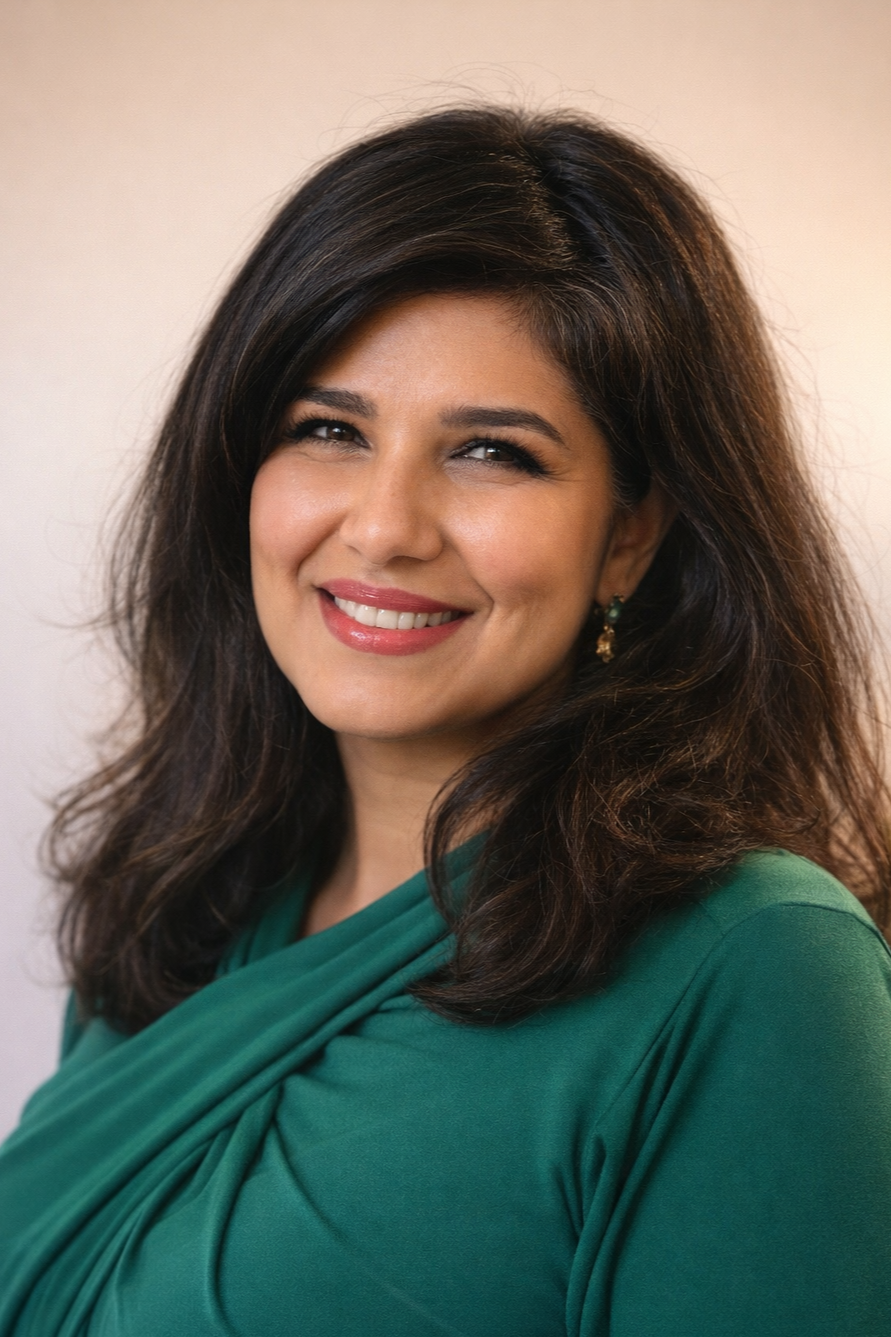
I'm Dr. Darshana Lele, a South Asian clinical psychologist with 26 years of experience. I specializes in LGBTQ+ affirming therapy for South Asian adults—understanding both the cultural complexity and the queer experience.
I offer therapy in English and Hindi, in-person in Pasadena and virtually throughout California.
Free 20-minute consultation: (626) 214-5366 or click here: mentalwealthinc.com/contact
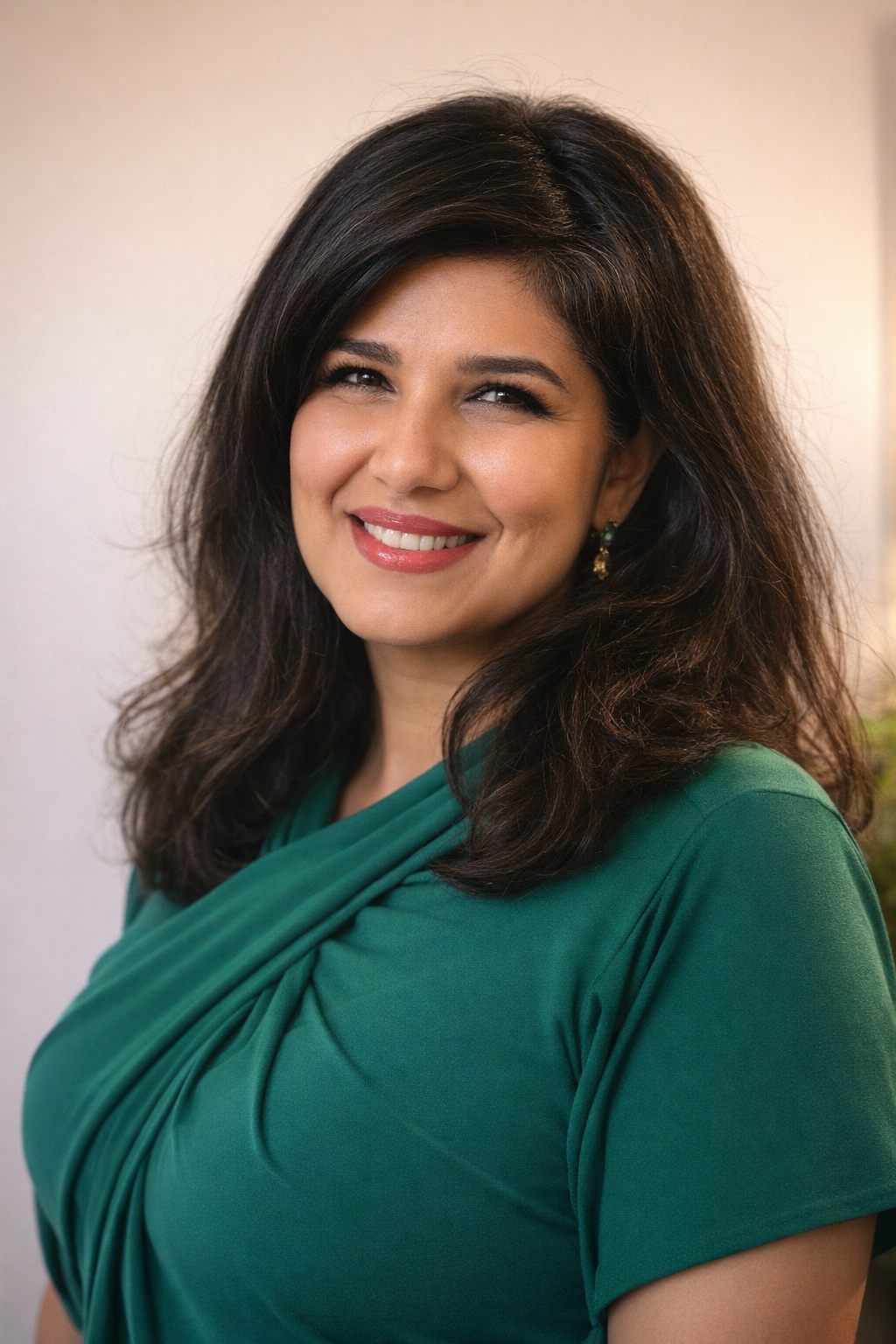
Dr. Darshana Lele, Ph.D., CA Psychologist #24852
Dr. Darshana Lele is a South Asian, Hindi-speaking clinical psychologist with 26 years of experience helping individuals and couples heal from trauma, anxiety, relationship challenges, and cultural pressures. As an LGBTQ+ affirmative, sex-positive trauma therapist, she helps clients understand how past relationships shape present patterns so they can build more authentic, connected, and fulfilling lives.
Learn more about her work with South Asian clients, LGBTQ+ clients, and couples therapy, or visit her About page.