You Did Everything Right. So Why Do You Feel Nothing?

You have everything you were supposed to want.
The career. The credentials. The salary. Maybe the relationship, the apartment, the respect of your family.
You did everything right. You followed the plan. You became what was expected.
And yet.
There's this quiet, persistent emptiness underneath it all. Like you're performing a life that doesn't quite fit. Like you're waiting for the feeling of "I made it" that never actually arrives.
You achieved everything. And it feels like nothing.
If this is you—you're not broken. You're not ungrateful. And you're definitely not alone.
Why success doesn't fill the emptiness
You were achieving for the wrong audience
From childhood, your achievements were never really yours. They were for your parents, your family, your community. Your good grades made them proud. Your career makes them boast to relatives. Your success is their redemption story.
When you achieve for others, achieving gives you relief—but never fulfillment. Because you're filling someone else's hunger, not your own.
The emptiness is your authentic self asking: but what do YOU want?
You never learned to want things for yourself
South Asian children, especially eldest daughters and high-achieving children, are often socialized to want what their family wants for them. Medicine. Engineering. Law. A "good" marriage. Status.
The question "What do YOU want?" was rarely asked—and rarely safe to answer honestly.
So you achieved. And achieved. And achieved. Building a life based on external metrics of success while your internal compass—your genuine desires, values, passions—was never developed.
You're successful by everyone's standards except the one that matters: your own
Achievement became your identity
When love felt conditional on performance, you learned: I am what I accomplish. My worth = my achievements.
This creates a terrifying problem: if you stop achieving, who are you?
Rest feels dangerous. Ordinary days feel worthless. You can't celebrate wins because the next goal immediately appears.
You're not living—you're perpetually performing. And performance is exhausting.
The life you built isn't yours
Many high-achieving South Asian adults reach their 30s or 40s and realize: I built the life my parents wanted. Not the life I wanted.
This isn't a criticism of your parents. It's a recognition that you optimized for the wrong goals.
And now you have this carefully constructed life that fits you like a costume—impressive from the outside, uncomfortable on the inside.
What the emptiness is telling you
The emptiness isn't a problem. It's information.
It's telling you:
The goals you were given weren't your goals
The career path you chose to make your family proud isn't the one that gives you meaning.
You've been performing rather than living.
There's a difference between going through the motions successfully and actually being present in your own life.
You don't know who you are outside of achievement
Strip away your credentials, your job title, your accomplishments—who's left? Most high-achieving South Asian adults have never asked this question.
Your authentic desires have been suppressed so long they've gone quiet
You don't even know what you want anymore. That numbness is grief.
The specific pain of South Asian high-achievers
Imposter syndrome that never quiets
No matter what you accomplish, there's always an internal voice saying "you don't really deserve this." You're waiting to be found out. You feel like you got lucky while everyone else actually earned it.
This isn't low self-esteem. This is the natural consequence of being told your worth was contingent on performance. When worth is earned rather than inherent, achievement never actually proves anything.
Can't rest without guilt
Rest feels wrong. Lazy. Wasteful. Your parents worked three jobs—how can you justify a day of doing nothing?
You've never learned that rest is not a reward you earn after productivity. Rest is a human need. And you've been starving yourself of it.
Success feels lonely
You achieved everything your family wanted. But you may have outpaced them culturally, economically, professionally. There's a particular loneliness in becoming what your family dreamed of—and feeling like you can't share the real experience of it with them.
What therapy offers
Finding what you actually want
Most high-achieving South Asian adults come to therapy and can't answer: "What do you want?" Not what your family wants. Not what looks good. What YOU actually want.
This is the foundational work. It's slower than you expect. And it's transformative.
Separating your worth from your accomplishments
You are not your credentials. You are not your salary. You are not your productivity.
We work on building an identity that exists independent of achievement—so that rest, failure, and ordinary days don't threaten your sense of self.
Grieving the authentic life you postponed
There's real grief in recognizing how many years you spent building the wrong life. We create space for that grief—without rushing to "just change course" as if decades of choices can be easily undone.
Building a life that's actually yours
This isn't about abandoning everything you've built. It's about asking: what parts of this life are genuinely mine? What do I want to keep? What do I want to change? What would I add if I were building for myself?
You deserve more than a successful performance of a life
You deserve a life that fits.
Not one that impresses people at family gatherings. Not one that redeems your parents' sacrifices. Not one that looks good from the outside.
One that feels like yours.
That quiet emptiness you've been ignoring? It's not ingratitude. It's not a phase. It's you—finally asking to be met.
Ready to start?
I'm Dr. Darshana Lele, Ph.D., a South Asian clinical psychologist with 26 years of experience.
Free 20-minute consultation: (626) 214-5366 or email: mentalwealthinc.com/contact or click below
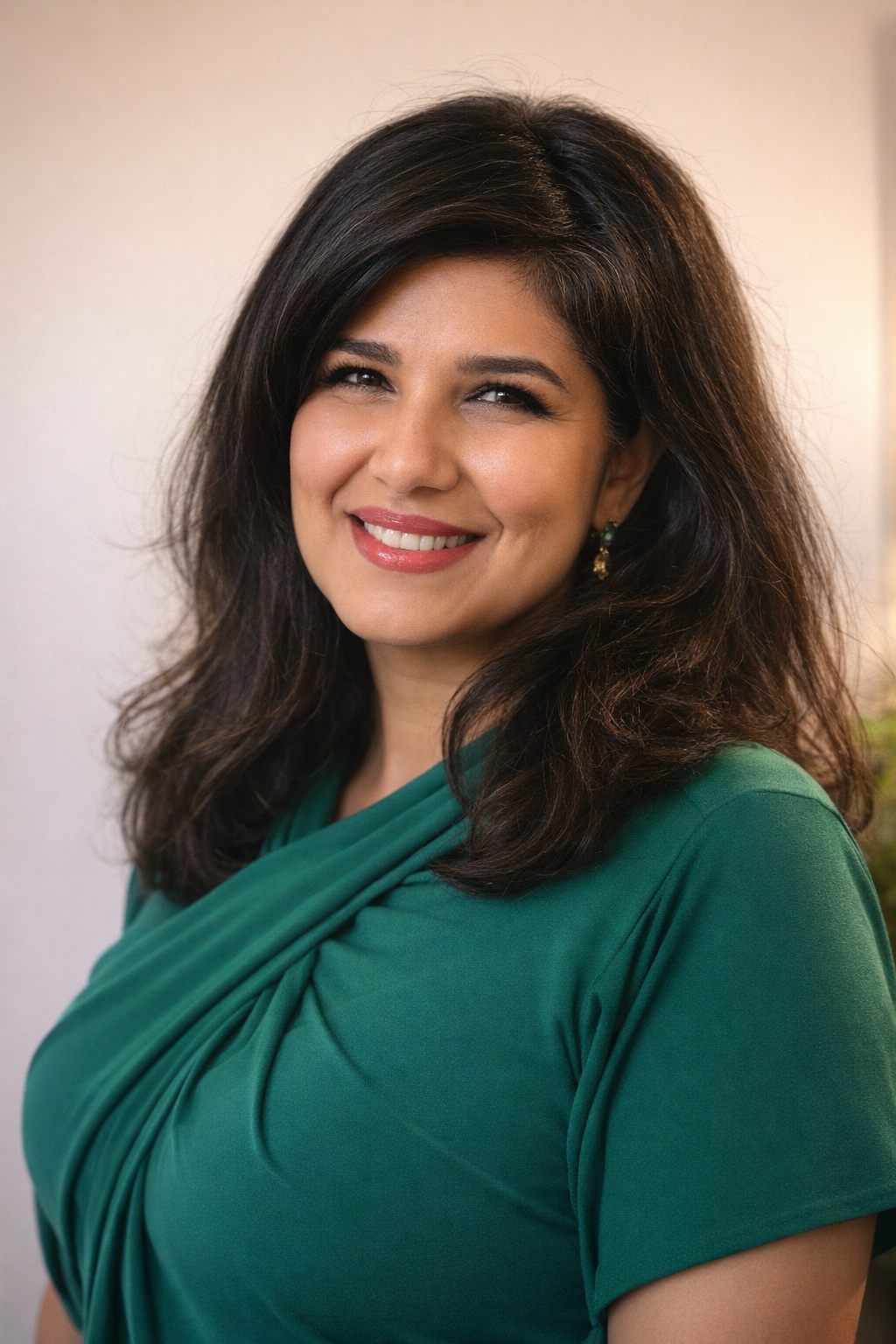
Dr. Darshana Lele, Ph.D., CA Psychologist #24852
Dr. Darshana Lele is a South Asian, Hindi-speaking clinical psychologist with 26 years of experience helping individuals and couples heal from trauma, anxiety, relationship challenges, and cultural pressures. As an LGBTQ+ affirmative, sex-positive trauma therapist, she helps clients understand how past relationships shape present patterns so they can build more authentic, connected, and fulfilling lives.
Learn more about her work with South Asian clients, LGBTQ+ clients, and couples therapy, or visit her About page.